This Story Can Be Found HereLiterary Analysis
Written by Daniel Page
Monday, 30 May 2011 20:44
Shaken, Not Stirred: Ian Fleming and the Lost Art of Being a GentlemanEditor's Note: May marks the birthday of James Bond's venerable creator Ian Fleming. As such, we've asked OKC.NET's first ever intern and resident Bond junkie Daniel Page to tell us what Fleming's Bond has to teach the young gentleman of today.
There's a series of commercials for a certain brand of tequila that has played during every Thunder game this season. You've probably seen them; a clean-cut, suave guy in an expensive suit tries to convince you that you shouldn't pay exorbitant amounts of money just to drink "name-brand" drinks. He's pretty convincing. After all, the tequila he's selling is still pretty good at half the price of a more expensive brand, and he looks like a hell of a cool guy, right? We certainly wouldn't be wrong in calling him cool, even a gentleman, wearing his slick black tie as he sits in a dimly lit, wood-paneled bar. And he's drinking such a modern drink, tequila-- not the scotch or bourbon of previous generations. Tequila is worldly, but down-to-earth, unassuming. Tequila: the drink of the modern gentleman. What this ad sells (as much as the product) is the idea of "yeah, be classy. But don't overdo it."
But isn't that something that defines class? Not overdoing it, but working hard at it?
Good taste in fashion doesn't come easy or cheaply, nor does developing a nuanced palette for good scotch or wine. Modern gentlemen have it easy. There are a number of magazines that tell you what to wear, what to buy, what to drink, and how to talk to women. There are even subdivisions of this idea: how to do all these things on a budget, or how to spend your sizable disposable income with discretion. In other words, how to succeed at being a gentleman without really trying. It didn't used to be like this. Before GQ, before Maxim, before Esquire, what did men do to seem like a gentleman?
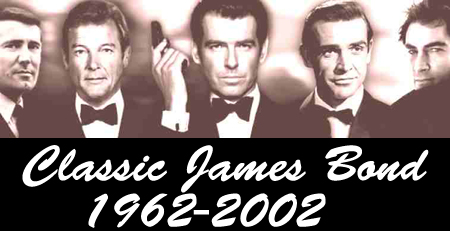
One problem might be the idea of "seeming like a gentleman." Being a true man of class and taste is perhaps like the famous Supreme Court quip about pornography, "I can't define it, but I know it when I see it." And no one exemplifies being a gentleman better than James Bond. The long-lived nature of the James Bond franchise gives viewers a unique look at the sea change that has taken place in what defines being a gentleman.
In the film "Casino Royale" (2006), which reintroduces Bond to a modern audience, a scene has a bartender asking Bond how he takes his vodka martini, setting up a hallmark line of the Bond franchise. "Shaken or stirred, sir?" the bartender asks. To which the eminently classy, tuxedo-clad Daniel Craig quips, "Do I look like I give a d**n?"
The thing is, Bond used to. It seems like just yesterday Bond was correcting M on the year of the vintage and the vineyard from which his sherry was distilled ("Diamonds Are Forever", 1971). How does he have such refined taste in brandy and wine? He gave a d**n about being a gentleman, almost as much as his creator Ian Fleming did. Fleming created Bond in the 1950s, during the autumn of the British Empire. A cultural change was imminent (Bond was born only 10 years before the disheveled Beatles took the world by storm). But in Bond's era, lessons in good taste were still of the utmost importance to a gentleman.
On May 28th, 1908, Ian Fleming was born in London. He served as an intelligence officer for the British navy in World War II, and after retiring from military service, created one of the most enduring characters in popular fiction, master spy James Bond. One of the problems with writing about Fleming and Bond is agent 007's ubiquity in mainstream culture; everybody has heard of him. The star of 22 films (not counting satirical portrayals and parodies),14 original novels, and close to 30 spin-off novels, James Bond has arguably the farthest-reaching grasp of any media franchise. An apocryphal statistic claims that half the population of the world has seen a Bond film. While this staggering statistic probably isn't true, consider if this number was halved, and only 25 percent of the world had seen a Bond film: that still amounts to almost 2 billion people. Bond has transcended being a touchstone of British culture, or even a cultural representative of the West; he has become truly global. Much like the proverbial saying about the British Empire at its height of power, the sun rises and sets on the Bond empire.
Because of this worldwide influence, critics and scholars have written exhaustively about Bond and Fleming in such diverse areas as feminism and postwar literature. The sheer size and scope of the franchise makes writing about Bond a daunting task. It is perhaps easier to engage with Bond either holistically as an aggregate set of concerns or through subdivisions: the literary Bond versus the filmic Bond, or the "canonical" Ian Fleming Bond novels versus later authors' re-appropriations of the character.
As interesting and exotic as these lenses are, they forget what it is that makes Bond so memorable to both thinkers and casual fans. That he really knew how to live.
It helps to look at Bond by considering his creator, the self-styled gentleman Ian Fleming. It seems strange to write about Fleming without mentioning Bond, or vice versa; their seemingly inextricable natures come because Bond in many ways is Fleming's alter ego: both were athletic youths educated at the prestigious Eton school, both served in naval intelligence during the Second World War and after, and both shared a voracious appetite for carefully selected vices: gambling, drinking, smoking, and womanizing.
Bond is the literary extension of Fleming's ideas on what a gentleman should be. It is the treatment of their vices that most thoroughly defines being a gentleman for Fleming and Bond. Interestingly, it is the way in which modern audiences engage with Bond and his vices that illustrate the differences between Fleming's gentleman and the modern iteration. The modern Bond would never be allowed to smoke in the clubs and high-end restaurants he frequents; Fleming would never allow his Bond not to smoke in them. Bond's gentlemanly vices not only make regular appearances in the Bond books, they are woven into the fabric of 007's world. In Fleming's novels, Bond is in every way the superhuman agent the films portray, but in general the films fail to portray Bond's personal shortcomings. Bond on film is rarely hung over or down-and-out, as he is in the opening chapter of Thunderball (1961), or regretful about missed romantic opportunities, as he is at the end of Moonraker (1955).
The literary Bond would no doubt scoff at the current glorification of hangovers as evidence of "a good time." In his eyes, it is simply uncouth and an embarrassment to show such weakness to alcohol as to be hungover. In fact, it is these vices, these chinks in Bond's gentlemanly armor, that give the literary character the pathos the films largely lack. Ironically, the most Fleming-esque Bond films (that acknowledge Bond's weaknesses) have been the most controversial among some Bond aficionados, probably because they reveal him to be only human after all. Timothy Dalton's performances as 007 have been widely criticized, as his (very faithful to Fleming's original novels, it must be said) portrayal of Bond as a cold and world-weary killer stand in such stark contrast to his immediate predecessor Roger Moore (who rendered Bond as a cartoon character).
Likewise, Daniel Craig has been panned for everything from being too muscular to be Bond, being too blonde to be Bond, to being too mean to be Bond. Craig's Bond is broken, drunk often, but painfully sober about the nature of his occupation, and the omnipresence of death in his life. Craig's Bond syncs up then only with Bond late in Fleming's career, the Bond of You Only Live Twice (1964), whose ruminations on death mirrored Fleming's own failing health.
For better or worse, Fleming's convictions about the lost art of gentlemanliness extended through every aspect of his life. Only months after You Only Live Twice was published, Fleming died of a fatal heart attack. His epicurean lifestyle no doubt contributed to his untimely death at the age of 56, but perhaps that was how he wanted it. A character in From Russia With Love (1957) fittingly sums up Fleming's attitude towards a gentleman's life: "at least I shall have died of an honourable disease. Perhaps they will put on my tombstone 'This Man Died From Living Too Much.'"
Ian Fleming and the Lost Art of Being a Gentleman
-
Blowfeld

- Ministry of Defence

- Posts: 3195
- Joined: Sun Feb 11, 2007 9:03 pm
- Favorite Bond Movie: Goldfinger
For Your Eyes only
The Living Daylights - Location: the world
Ian Fleming and the Lost Art of Being a Gentleman


"Those were the days when we still associated Bond with suave, old school actors such as Sean Connery and Roger Moore,"
"Daniel didn't have a hint of suave about him," - Patsy Palmer
-
Omega

- 0010
- Posts: 7634
- Joined: Mon Mar 05, 2007 9:01 pm
- Favorite Bond Movie: TLD LTK GE TND TWINE DAD OHMSS
- Favorite Movies: Gladiator
John Wick
Pacific Rim
LOTR trilogy
RED
Kingsman
X-Men First Class
X-Men Days of Futures Past
MI Rogue Nation - Location: the lost city
- Contact:
Re: Ian Fleming and the Lost Art of Being a Gentleman
This is what made the movies fun to watch.As interesting and exotic as these lenses are, they forget what it is that makes Bond so memorable to both thinkers and casual fans. That he really knew how to live.
............ 
-
Mazer Rackham

- Q
- Posts: 1569
- Joined: Tue May 08, 2007 8:50 pm
- Favorite Bond Movie: Thunderball
From Russia with love - Location: Eros
Re: Ian Fleming and the Lost Art of Being a Gentleman
[highlight=#ffff80]"Likewise, Daniel Craig has been panned for everything from being too muscular to be Bond, being too blonde to be Bond, to being too mean to be Bond. Craig's Bond is broken, drunk often, but painfully sober about the nature of his occupation, and the omnipresence of death in his life. Craig's Bond syncs up then only with Bond late in Fleming's career, the Bond of You Only Live Twice (1964), whose ruminations on death mirrored Fleming's own failing health"[/highlight]
Poor fellow feels the need to be a Craig apologist so he isn't attacked personally, because truthfully he nailed why Craig is so bloody gawd awful.
It takes a better fiction writer than Fleming was to pen a believable paragraph squaring Ian Fleming's vision to the rogue man-ape running loose cannon across the silver screen the last 5 years. YOLT Bond is no way equatable to Danny Boy monosyllabic regurgitation of Bond. In YOLT Bond is severely depressed and on pills, seeing doctors, thinking of retiring to the simple life, but he never denigrated himself into becoming a uncouth SOB who couldn't be bothered to give a d**n.
The only coloration between YOLT and Craigster's approach is Bond screwed up on several mission. Although there is a difference Craig's Bond is a screw up and Fleming's Bond was in a temporary slump.
Poor fellow feels the need to be a Craig apologist so he isn't attacked personally, because truthfully he nailed why Craig is so bloody gawd awful.
It takes a better fiction writer than Fleming was to pen a believable paragraph squaring Ian Fleming's vision to the rogue man-ape running loose cannon across the silver screen the last 5 years. YOLT Bond is no way equatable to Danny Boy monosyllabic regurgitation of Bond. In YOLT Bond is severely depressed and on pills, seeing doctors, thinking of retiring to the simple life, but he never denigrated himself into becoming a uncouth SOB who couldn't be bothered to give a d**n.
The only coloration between YOLT and Craigster's approach is Bond screwed up on several mission. Although there is a difference Craig's Bond is a screw up and Fleming's Bond was in a temporary slump.
"That f**king truck driver!" Ian Fleming
-
The Sweeney

- 003
- Posts: 3393
- Joined: Mon Feb 12, 2007 2:21 pm
- Favorite Bond Movie: OHMSS, GF, LTK, CR, FRWL
- Favorite Movies: Bullitt, The Long Good Friday, The Towering Inferno, Jaws, Rocky, Superman the Movie, McVicar, Goodfellas, Get Carter, Three Days of the Condor, Butch & Sundance, The Sting, All the Presidents Men
- Location: Underneath a Mango Tree....
Re: Ian Fleming and the Lost Art of Being a Gentleman
Enjoyed reading that. Nice find Blowfeld.
-
Blowfeld
- Ministry of Defence
- Posts: 3195
- Joined: Sun Feb 11, 2007 9:03 pm
- Favorite Bond Movie: Goldfinger
For Your Eyes only
The Living Daylights - Location: the world
Re: Ian Fleming and the Lost Art of Being a Gentleman
Cheers SweeneyThe Sweeney wrote:Enjoyed reading that. Nice find Blowfeld.

It is a unique piece. BTW I updated the link, it looks like they moved to a new program after I posted the link. In my opinion this chap deserves all the credit he can get.
"Those were the days when we still associated Bond with suave, old school actors such as Sean Connery and Roger Moore,"
"Daniel didn't have a hint of suave about him," - Patsy Palmer
-
Dr. No

- 006
- Posts: 3453
- Joined: Sun Feb 11, 2007 6:28 pm
- Favorite Bond Movie: Dr. No
- Favorite Movies: Indiana Jones & the Last Crusade
SpiderMan 2
Empire Strikes Back
Shawshank Redemption - Location: Crab Key
Re: Ian Fleming and the Lost Art of Being a Gentleman
Very good thank you for posting it 
Chief of Staff, 007's gone round the bend. Says someone's been trying to feed him a poisoned banana. Fellow's lost his nerve. Been in the hospital too long. Better call him home.